I kept one playlist unfinished for an entire year. Not unfinished in the casual way we abandon things—no, this was deliberate, a small experiment in memory and attention. I named it "2025 (still)" and added tracks as the months unfolded, sometimes curating whole clusters for a week, other times...

Oct 04, 2026
• by Élise Laurent
Latest News from W Oswald Co

When I recently found a folded index card at the back of a kitchen drawer—edges browned, handwriting a little spidery—I felt the sudden clarity of someone else’s small ritual. On the card was a recipe for lemon drizzle cake, written in my grandmother’s hand. I hadn’t thought about that cake in years, but holding the card, I could almost hear her humming as she zested a lemon, see the...
Read more...
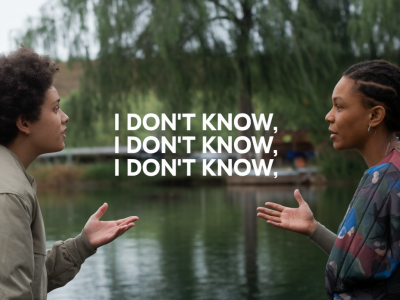
I learned a little conversational trick years ago — not from a book but from a series of awkward dinner parties and stubborn interviews where everyone seemed to be playing verbal tennis. When a question landed on me that I didn't have a neat answer for, I began to say, deliberately and aloud, "I don't know". Not once, but three times, with a brief pause between each. It felt oddly humble,...
Read more...

There is a single drawer in my flat that I have kept untouched in a way that feels almost intentional. It is not the bedside drawer of lip balms and medication, nor the kitchen drawer with spatulas and stray takeaway chopsticks. This is a slim, wooden drawer in the hallway console: a curated jumble of small objects — a ticket stub from a late-night cinema, a Polaroid of a rainy morning, a brass...
Read more...

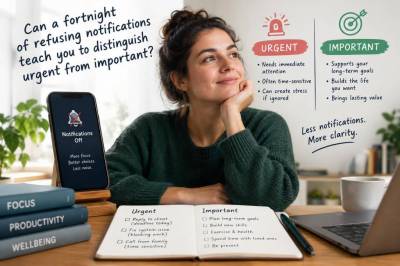
I decided, on a Monday morning with a cup of coffee cooling beside me, to ignore the headlines for a week. Not to mute notifications or close my browser entirely, but to deliberately avoid the fast scroll of top stories, the curated outrage, the cheerful apocalypse that often greets me on news sites and social feeds. I wanted to see what would happen to my attention — to what noticed me, what I...
Read more...
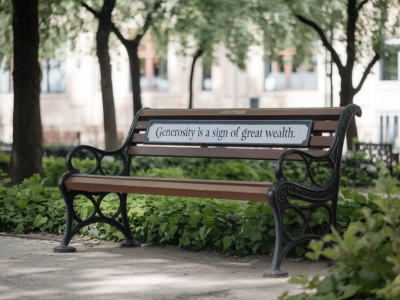
I have a habit of lingering on benches. Not in the rom-com, contemplative way that signals a life-changing montage, but in the quiet, unpaid apprenticeship of watching and being watched. One rainy Tuesday I sat on a bench beneath an overgrown plane tree outside a small train station and realised how much of what I understand about generosity comes from the small choreography that unfolds...
Read more...
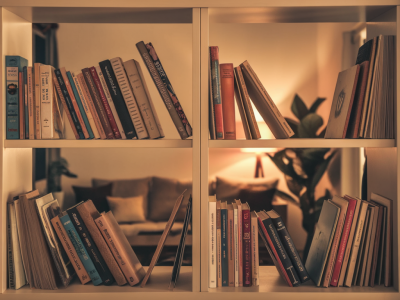
There is a small, almost private language living on my bookshelves: the arrangement of spines, the odd stack on the coffee table, the way a row of paperbacks thins into a stubborn gap. For years I treated these gaps as mere accidents—space left after lending a book, a book given away, or a late Amazon delivery. Lately, I’ve started to read them more purposefully. Those empty patches are not...
Read more...

I used to love the ritual of my morning coffee. Not the caffeine in itself, but the small choreography: the kettle’s whistle, the grind turning into a pile of earthy noise, the slow bloom as hot water met grounds. Lately, the whole thing felt mechanical. I made the cup, sipped it, and noticed nothing — except a vague irritation that something that used to matter to me no longer did. That...
Read more...
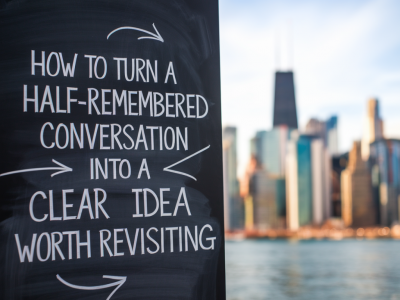
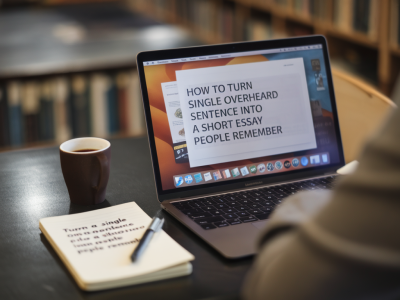
I was walking home one evening when a stray line from a conversation I’d overheard lit up a corner of my mind: “We forget not because memory fails, but because we never wrote the thought a second time.” The line was half-remembered, italicized by my own imagination, and stubborn enough to hang around the way a song does when you can’t quite find the chorus. That stray line turned into a...
Read more...

I have argued online more times than I care to admit — in comment threads under longform journalism, in the unruly back-and-forth of Twitter, in the less performative but still fraught spaces of Facebook groups. Some exchanges fizzled into productive curiosity; others lodged in my chest like a splinter of embarrassment. Over time I began to notice patterns: arguments that preserved curiosity...
Read more...
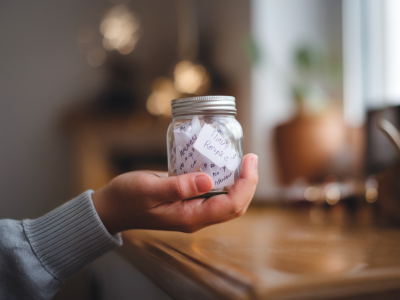
There’s a kind of ridiculous intimacy in keeping tiny regrets. They don’t announce themselves — they’re the half-smile when you realise you could have said something kinder, the quiet twinge when you opted for punctuality over a conversation, the small ache that follows leaving a book unread on your nightstand. For years I treated these little regrets as minor annoyances, the detritus of...
Read more...