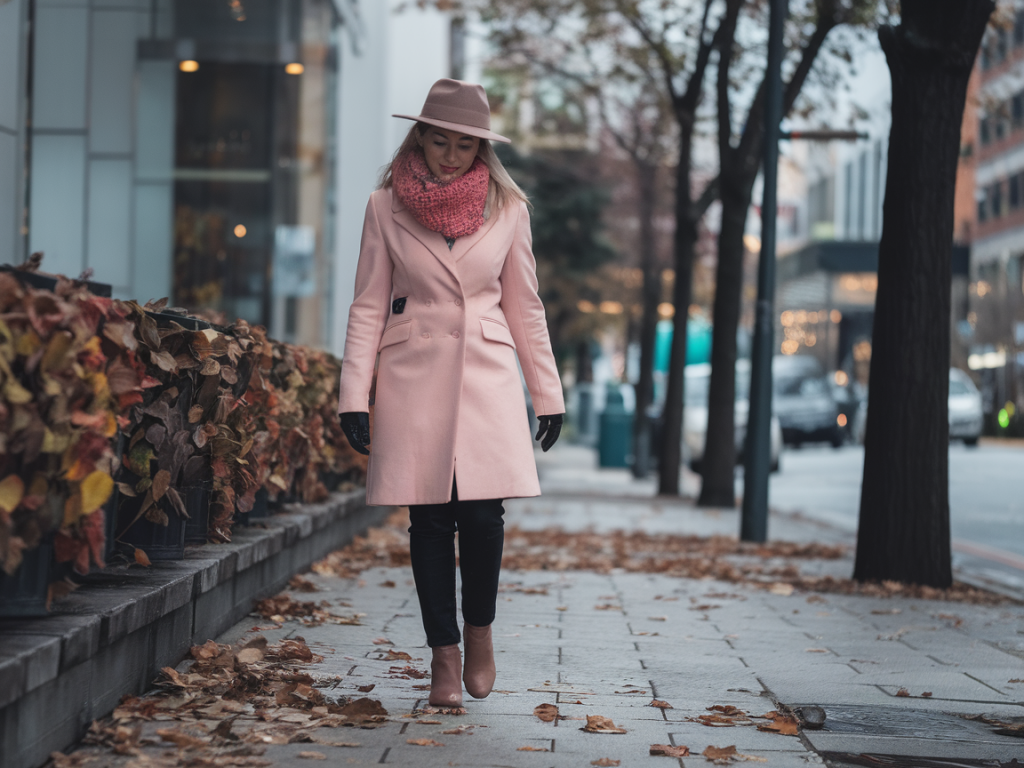
I have a small ritual for walks now: before I step outside I ask myself, "What would a stranger notice?" It sounds like a strange prompt — intentionally so — and it has a way of changing the geometry of attention. The question nudges me out of familiar routes and habitual gazes and into a state of gentle curiosity. Over the past few years, asking it has turned ordinary walks into short experiments in perception, and sometimes into surprising little essays in observation.
Why that particular question?
There are lots of ways to prime yourself for a walk. Some people listen to podcasts; others use exercise apps that map their routes and count steps. My question is a quieter device: it asks me to imagine displacement. A stranger doesn't have my memories tied to a bench or the same mental map of every façade. They notice things I might have stopped seeing. The prompt is at once empathetic and inquisitive — it asks me to adopt an outsider's receptivity.
When I frame a walk this way, I become attentive to discrepancies: the tile pattern on an old doorway that I never paid attention to, the cadence of a delivery van's brakes, the scent that drifts from a bakery at 8 a.m. Instead of walking through a neighborhood I know, I begin to walk alongside it.
How to use the question on your next walk
Here are some small, practical ways I use the prompt. They’re not rules — more like playful constraints that help me notice differently.
- Start with a 90-second scan: When you arrive somewhere — a park entrance, a street corner — pause and look around for one and a half minutes. What texture stands out? What sound seems out of place? The time limit keeps it focused and makes the task feel fun rather than burdensome.
- Pick one object and follow it: Choose a lamp post, a poster, a pigeon, a puddle. Follow its context. Who interacts with it? How does it change along your route? This micro-investigation often reveals unexpected patterns.
- Use constraints to sharpen attention: Try to find three types of red in the next five minutes, or count how many doors have handwritten signs. Constraints turn wandering into a small game.
- Record a single sensory note: Each time you stop, jot one sensory word in a pocket notebook or a notes app — “yeasty,” “rumbling,” “synthetic lilac.” Over time, these notes form a patchwork memory of places.
What strangers see that we often miss
When I imagine the world through a stranger’s eyes, a handful of things consistently rise to the surface.
- First impressions of care: Do window boxes look tended or neglected? Is the front of a shop swept? Little things signal whether humans are paying attention to a place, and those small signals are surprisingly eloquent.
- Contrasts: A modern café sign pasted next to an ornate Victorian façade; a high-end bicycle chained to a rusted rail. Strangers are alive to juxtaposition because they haven’t internalized the neighborhood’s narrative.
- Ephemeral traces: Torn flyers, stickers on lampposts, hastily painted arrows. These traces map conversations, campaigns, and movements you might have learned to ignore.
- Movement patterns: The way a delivery driver zigzags, which bench is most often occupied, which tree doubles as a meeting point. These habits tell a place’s lived story.
Stories I found on walks
Once, walking with this question in mind, I noticed a sequence of mismatched chairs outside a house on a quiet street. Up close, each chair had a name painted under the seat. Over several weeks I learned they were placed there for a community exchange run by a woman named Noor, who asked passersby to sit, leave a message, or take a book. A stranger might simply see the chairs; I saw an invitation.
On another walk I counted three different languages on shopfronts within two blocks. It made me look at delivery schedules pinned to doors and at the small notices in windows offering translation services. Those signs were discrete evidence of a multicultural daily life that I had grown used to and no longer saw.
Tools (that aren’t apps)
Attention is the tool, but a few physical things make the practice more pleasurable and practical.
- A pocket notebook: I like a small Field Notes or Moleskine pocket notebook. Writing one sensory detail anchors the memory.
- A modest camera or your phone camera: Photographing textures or patterns — not selfies, but details — trains your eye to compose and notice.
- Comfortable shoes: I favour Allbirds or a worn pair of trainers. If your feet are comfortable, you’ll roam longer and softer.
- A reusable bag: I often collect interesting paper ephemera — a receipt, a leaflet — and it’s helpful to tuck it away.
How this habit reshapes thinking
There’s an intellectual pleasure to practicing this question. It’s a small exercise in perspectival humility: recognizing that my default mode of seeing is one of many. It also reframes boredom. When a route feels prosaic, I treat it like a museum I’ve visited too often — not because the artifacts are uninteresting, but because I’ve stopped curating my attention.
Finally, the exercise has ethical edges. Imagining what a stranger would notice makes me more aware of accessibility, of signage, of weathered benches that might tell someone the place is unloved. It nudges me toward a civic noticing: if I become more alert to the conditions of public space, I’m more likely to speak to them or act on small, practical ways to care.
Practical variations to try
- The 15-minute stranger walk: Set a timer for 15 minutes. Walk without headphones. Ask yourself every five minutes what a stranger would notice next. Short, intense, revelatory.
- The reverse stranger: Imagine you are the stranger who knows something important about the place. What would you point out to me? This can be a creative prompt for writing, sketching, or photography.
- The conversation experiment: Invite someone you don’t usually walk with and compare notes: what did they see first? Differences in perception are often delightful.
On a recent morning I walked my usual route with the question in mind and realized I had never paid attention to the rhythm of the alleyways that funnel wind into the square. For a long moment I stood and listened to that wind shape itself around buildings, a sound that felt both architectural and intimate. A stranger would have arrived and noticed that wind immediately. That small admission — that the world still has things I’m unfamiliar with — is one of the privileges of walking slowly and asking a curious question.