I have a habit: whenever a thought arrives that feels too loud or too general, I make tea. It is a modest ritual—boil water, choose a leaf or a bag, wait—but it subtly rearranges the interior furniture of my day. Tea-making slows something down, or rather, it makes me notice the speed at which I am moving. It reveals how I steward time, how I make tiny decisions, and how I seek comfort in calibrated gestures.
Slow time in a speeding world
When I lift a kettle, I am performing a small deliberate act that insists on duration. The kettle's whistle is a promise that something will complete; it marks a measured arc. In modern life, many of the signals that used to structure time—sunrise and sunset, mealtimes, communal rituals—have been blurred by screens and schedules. The tea ritual reintroduces a simple temporal architecture. It sets aside a ten-minute interval, not to be filled by half-attentive tasks, but to be inhabited.
This is not about romanticizing slowness as an aesthetic. I am not ordering more "slow" into a life already overflowing with demands. Rather, the act of making tea is a micro-rehearsal in attention. While the water warms, I set a cup, I gaze at the leaves, I attend to the steam. These small attentions fragment the day's seamless urgency into discernible moments. In doing so, they give me permission to recalibrate: to evaluate whether I will return to an email that requires strategy, a book that requires patience, or simply to sit and let my mind rearrange itself.
Decision-making in miniature
Tea-making is full of choices. Black, green, oolong, herbal; loose leaf or bag; milk, sugar, honey, lemon—or none at all. Each decision is minor, yet together they form a practice of preference. Deciding what tea to make is a way of asking: what do I need right now? Do I want something brisk to sharpen my focus? Something floral to soothe a low mood? Something caffeinated to carry me through the afternoon, or something gentle to close the day?
Those tiny decisions teach me about the way I choose more consequential things. The mental muscles involved—weighing options, attending to current feelings, imagining an outcome—are the same as those used in larger choices. When I'm indecisive about a tea, I notice how quickly I can default to habit (the same familiar bag), or conversely, how I might leap to novelty. Both tendencies tell me about my appetite for comfort versus curiosity.
I sometimes make the ritual intentionally more particular: a glass teapot with whole leaves, a timer to count steeping minutes, a scale to weigh the leaf. These additions transform the act into a small experiment. Watching the way a single variable—steeping time, water temperature—changes the result reminds me that decisions rarely exist in isolation; they are part of systems, and outcomes depend on nuance.
Comfort as crafted, not automatic
Comfort is often imagined as a soft, passive state you sink into. But the tea ritual insists that comfort can be active. Pouring, steeping, stirring—these are motions that build a refuge. They are not mere escape; they are an intentional construction of a space where the body's steadiness meets the mind's questions.
I remember making tea in a small London flat after a long day of edits and meetings. The room was cold, my head full of to-dos, and yet the warm cup I cupped between my hands rewired my posture and my breath. The heat was immediate; the comfort was cumulative. I had engineered a small environment of reassurance: the weight of the mug, the scent of bergamot, the rhythm of sipping. This comfort held me just long enough to step back into the world's demands with a steadier step.
There is also the subtle social dimension of comfort. Making tea for another person is a visible offering, a recognition of shared time. It softens the edges of conversation and creates a mutual space. Even solitary tea becomes an invitation to myself: a way of saying, You are owed small kindnesses. This is an ethic of care enacted through ritual.
Ritual as attention training
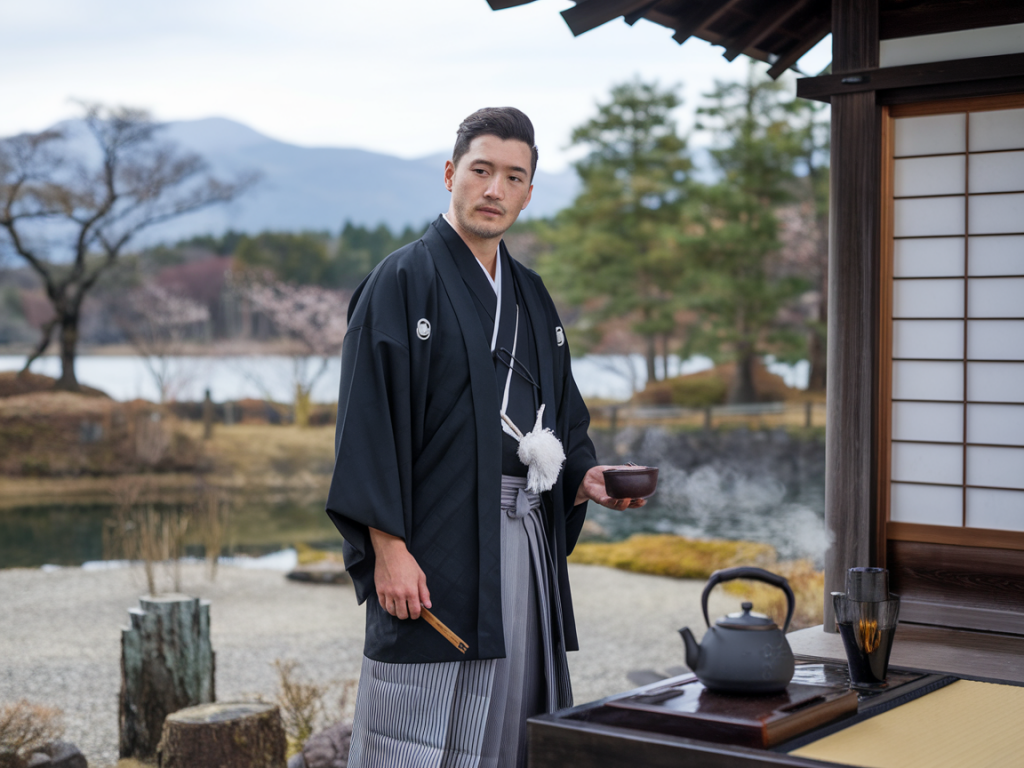
Rituals are often dismissed as superstitious or ornamental, but the tea ceremony—however simple—works like attention-training. It creates an anchor: a short series of sensory cues that return me from abstraction to presence. Steam, aroma, the clap of a kettle lid, the sound of a spoon—these tiny facts tether thought.
I have noticed that when I am anxious, the ritual becomes more literal: I follow rules—time, temperature—because rules are steadier than feelings. When I am sad, the ritual loosens into improvisation: a different cup, an experiment with honey. Each mode is instructive. Rules offer certainty; improvisation offers surprise. Both are valid ways of being with oneself.
What a cup of tea reveals about identity
Our tea choices hint at parts of who we are. Someone who prefers a simple English Breakfast with milk might be signalling a taste for familiarity and robustness. Someone who loves a smoky lapsang souchong might enjoy the theatrical. A fan of Japanese sencha often values subtlety and ritual. These are only playful generalizations, but over time, the habits that show up in the teacup sketch a pattern: of comfort zones, of adventurousness, of attention to detail.
Brands and objects can be part of that story. I have a particular fondness for Pukka's herbal blends for evenings when I want to turn down the volume, and for a British builder's tea when I need something fortifying. A modest, well-made kettle—say, a classic stovetop model or an electric one with temperature settings—becomes a companion in this practice. The familiar mug, chipped or unassuming, can be more intimate than a statement piece bought for aesthetics.
Small rituals, broader habits
Tea-making is not a magic bullet. It doesn't dissolve structural problems or erase a week of poor sleep. But it functions as a protocol for attending to the small things that shape a life. Those small attentions add up. They teach me to value the time it takes to prepare, to notice the interior weather before reacting, and to be more compassionate in my decisions.
On some afternoons I skip the ritual and reach for something quicker; on others I extend it into a deliberate pause, brewing two cups, staying with the steam. Both choices tell me something—about energy, about patience, about what I need. The ritual, more than any prescribed rule, is a flexible architecture for living: simple, repetitive, humane.
| Type of tea | What it tends to do | When I reach for it |
|---|---|---|
| Black (English Breakfast) | Grounding, fortifying | Morning or when I need a resolute lift |
| Green (Sencha, Gunpowder) | Clarifying, gentle alertness | Reading or focused creative work |
| Oolong | Complex, contemplative | Slow afternoons or long conversations |
| Herbal (Chamomile, Pukka blends) | Soothing, restorative | Evening wind-down or anxious moments |
Making tea reveals not only how we manage minutes, but how we inhabit ourselves. It is a small laboratory where time, decision and comfort intersect. If you ever find your day humming too loud, try making tea with an intention: notice what you choose, how long you wait, and how the simple act of attending changes the way you move through the next hour.