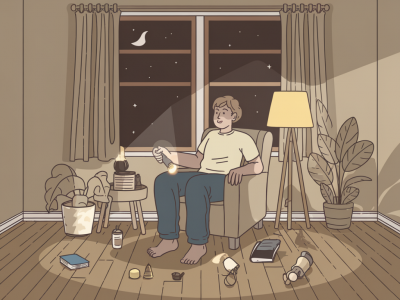
I decided, almost as an experiment and partly as an humility practice, to spend a month replying with three small words more often than I normally would: "I don't know." Not as a conversation-stopper, but as an opening—an honest admission of uncertainty that might invite curiosity rather than close it down. I wanted to see what would happen to my thinking, to the tone of my relationships, and to the little social rituals that often disguise our ignorance.
Why I tried it
We live in a culture that prizes answers. Quick certainty feels efficient and socially rewarded: we smooth over doubts, we pretend competence, we fill silences. Yet that compulsion to answer can flatten curiosity. Saying "I don't know" is awkward at first because it exposes that flat underside—lack of immediate knowledge, lack of polish.
My motivation was simple and slightly mischievous. I wanted to test whether admitting ignorance more often would make me more curious, and whether it would shift conversations from performance to exploration. Would friends feel abandoned? Would colleagues lose confidence in me? Or would conversations deepen, become more collaborative? What would it do to my own comfort with not-knowing?
How I practiced it
I set a few informal rules:
The first few days felt disconcerting. In the grocery store, when a friend asked whether a brand of oat milk was any good, I said, "I don't know—I've never tried it. Want to buy a carton and try together?" She laughed, and we ended up comparing textures and notes by the cereal aisle. At a team meeting, when asked about projections for a new project, I confessed partial ignorance and proposed a quick mini-research sprint instead of speculating. Colleagues appreciated the honesty. The habit began to change the shape of exchanges.
What it did to my curiosity
Saying "I don't know" rekindled a certain childlike itch to find out. Without the pressure to perform as though I already had the right answer, I felt free to ask better questions. The admission created a small void that curiosity happily filled.
Curiosity felt less performative and more playful. There was a cheap thrill in saying, "I don't know—let's find out," and then watching a tiny collaborative learning moment unfold over coffee or a shared article.
What it did to relationships
The effects were subtle but cumulative. In some relationships the change was small; in others it reconfigured the dynamic.
Not every moment was rosy. A few people equated repeated "I don't know"s with passivity, especially in roles where timely decisions are expected. I learned to pair the phrase with a next step—whether that's a timeline for finding an answer, a proposal for a small experiment, or a referral to someone who might know. The honesty was most effective when it was coupled with movement.
Surprising social mechanics I noticed
A few patterns emerged that surprised me:
Practical takeaways — how to try this without alienating people
If you’re curious to try a month of saying "I don't know", here are a few practical tips that helped me keep it generative rather than evasive:
A mini table of conversational moves
| When you say | What follows well |
| "I don't know" | Ask a clarifying question: "What do you mean by that?" |
| "I don't know" + offer time | Say: "I'll look into it and circle back." |
| "I don't know" + hypothesis | Say: "I don't know, but I suspect..." |
| "I don't know" + collaboration | Say: "Want to find out together?" |
After a month, the practice didn't make me less decisive. If anything, it made decisions feel more honest and better informed. It restored a sense of permission to be curious without spectacle. Saying "I don't know" became less a confession of failure and more a strategy for deeper listening, communal inquiry and calmer confidence.
One small, ongoing result: I now keep a longer bookmarks folder and an ever-growing list of podcasts, articles and books that started as answers I couldn't provide in conversation. Curiosity sustained itself by successive small admissions. The social world, it turns out, is surprisingly generous when you stop pretending to have all of the answers.