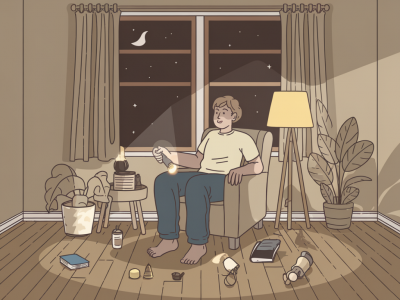
I once overheard a woman on a train say, almost to herself, "We don't buy time, we borrow it." It lodged in my head like a pebble in a shoe. Within a few hours it had become the scaffold for an essay — not because the sentence was perfect, but because it offered a hinge: a surprising claim that invited questions. Overheard sentences are little detonations of curiosity. They are half-formed arguments, private confessions, witty metaphors or misfired advice that, if you pay attention, can open into a wider piece about life, language and the way we hold meaning.
Why a single sentence can sustain an essay
There are a few reasons a stray line is fertile ground. First, sentences are compressed thought — they already contain a voice, an image and an attitude. Second, they often point to something unstated; that absence is the space an essay wants to inhabit. Third, overheard lines have authenticity. They weren’t written to impress; they were spoken in passing. That looseness gives you permission to be exploratory rather than authoritative.
How I turn an overheard sentence into a short essay
I treat the sentence like a map marker. Here’s the method I use, step by step, with the kindness of roughness rather than rigid rules.
Write it down exactly as you heard it. Save any recollection of the voice, the place, the moment. That context is useful: a sentence said at a funeral carries different weight from one said in a coffee shop. I keep a small notebook or my phone’s notes app and jot the line, time and location. The memory of a cracked voice or a laugh can be as evocative as the words themselves.
What assumptions does the sentence make? Who is the implied speaker? What image does it summon? What’s the unstated contradiction? What feeling does it leave you with? These questions unfurl threads. For the "borrow time" line, I asked: borrowed from whom? With what obligations? Is time an object at all?
I begin suspicious of absolutes. If someone says "we never..." or "everyone does..." I look for exceptions. If a sentence is poetic, I test it against the practical. This flip between skepticism and wonder keeps an essay lively: you’re not lecturing, you’re experimenting.
Associations are your friends. The line about borrowed time led me to thoughts about library books, parenthood, deadlines, and time-management apps like RescueTime. Some associations will be dead ends — that’s fine. Keep what glows. The essay's job is to make surprising but credible connections.
Essays that stick often hinge on a personal anchor — a brief anecdote, a failure, a domestic scene. It humanizes abstraction. I might confess how I failed to return a borrowed bike or how my grandmother treated time as something to be thrifted. These instances both illustrate and complicate the original line.
Don't feel compelled to settle the sentence into a neat moral. Instead, offer a proposition that reframes it. With "we borrow time," I suggested we might be better at recognizing the relational economy of attention: time is borrowed not just from the future, but from other people’s presence.
Rather than wrapping up, I prefer to leave an opening — a question, a concrete image, a tiny ritual the reader can try. Essays aren’t verdicts; they’re invitations.
Practical prompts to get started
If you want exercises, try these on for size. Each assumes you have one overheard line saved.
Write a 300-word scene where the line is said aloud. Focus on sensory details: the clink of cups, a touch on a sleeve. Let the sentence reveal character.
Choose an imaginative question. What if the sentence were a law? What if it were advice given to a child? What if it came from a famous person like Margaret Atwood or Marcus Aurelius? Play with perspective shifts.
Prove or disprove the sentence with a short list of cases. If someone says "people don't read anymore," name readers you know and the surprising places they read (on subways, in waiting rooms, in apps like Kindle).
Challenge yourself to expand the line into a compact essay. Use one anecdote, one broader idea, and one small ritual or question at the end. This length forces clarity and pruning.
Common traps and how to avoid them
Not every overheard sentence is an essay seed. Here are traps I've fallen into and how I learned to avoid them.
Sometimes I try too hard to make the sentence profound, bolting on facts until the original voice disappears. Counter this by preserving the sentence's texture; keep some informality and the original cadence where possible.
Avoid claiming the sentence applies to everyone. Better to explore its limits. Essays gain credibility when they admit exceptions.
Research is useful, but don't let it replace your first impressions. Start with what the line evokes in you, then add context selectively: a book title, a statistic, or a brief quote that clarifies rather than overwhelms.
Examples from my notebook
Here are two tiny sketches from my own notes that became essays, to show the path from ear to page:
I turned this into a piece about thrift, repair culture and what objects reveal about memory. A visit to a local repair café and a conversation with a watchmaker provided texture. The essay didn't settle whether hoarding is sentimental or selfish; it explored the ethics of keeping.
This became a short meditation on media, virality and the quiet ways facts persist. I threaded in an anecdote about overhearing a heated news discussion and paired it with a note on social platforms where volume often trumps nuance.
Each example began with the same simple movement: curiosity, a quick jot, and a willingness to follow where the sentence tugged. If you cultivate the habit of listening — not just hearing, but noting the small, stray utterances around you — you'll amass a private library of prompts. The trick is to treat each line kindly: not as material to be mined, but as an invitation to wonder.