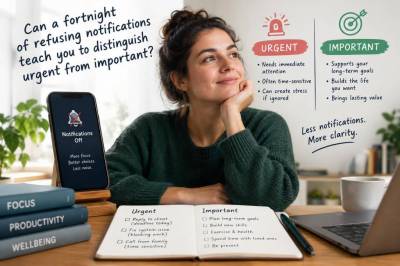
I kept one playlist unfinished for an entire year. Not unfinished in the casual way we abandon things—no, this was deliberate, a small experiment in memory and attention. I named it "2025 (still)" and added tracks as the months unfolded, sometimes curating whole clusters for a week, other times...

Oct 04, 2026
• by Élise Laurent
Latest News from W Oswald Co
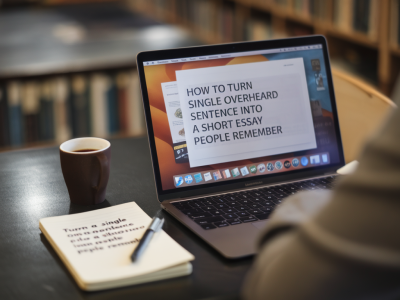
I once overheard a woman on a train say, almost to herself, "We don't buy time, we borrow it." It lodged in my head like a pebble in a shoe. Within a few hours it had become the scaffold for an essay — not because the sentence was perfect, but because it offered a hinge: a surprising claim that invited questions. Overheard sentences are little detonations of curiosity. They are half-formed...
Read more...
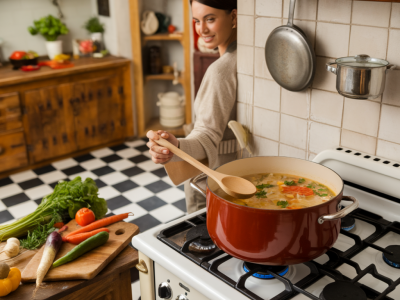
There is, in my kitchen drawer, a small card that is as misbegotten as it is beloved. The edges are softened from years of handling, and a sticky smear of something brown — jam? sauce? — has become part of its patina. On it, in my grandmother’s looping hand, is a recipe for an apple cake that never looks like the photographs in cookbooks. It’s uneven: proportions scribbled, an instruction...
Read more...

I decided, almost as an experiment and partly as an humility practice, to spend a month replying with three small words more often than I normally would: "I don't know." Not as a conversation-stopper, but as an opening—an honest admission of uncertainty that might invite curiosity rather than close it down. I wanted to see what would happen to my thinking, to the tone of my relationships, and...
Read more...
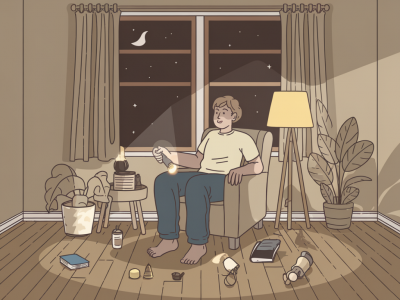
I started doing a small experiment on a bleak November evening, partly because my mornings had been a battleground of nagging to-dos and low-grade dread. The idea was absurdly simple: before bed, spend five minutes scanning the room and naming aloud five objects that mattered for the next day—keys, wallet, train pass, gym kit, work laptop. The rule was strict only in its brevity. No lists on my...
Read more...
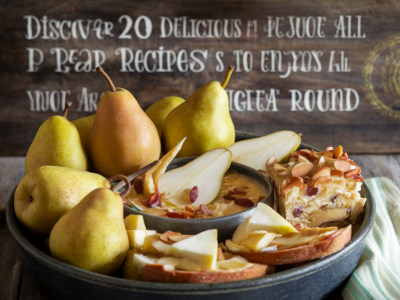
I have long believed that a single fruit can anchor a year of meals, small moments and gatherings. Pears do that for me: they’re gentle, versatile and forgiving, slipping from crisp snack to melting poached jewel with the same kind of humility I admire. In this piece I share idées gourmandes à base de poires — 20 recipes, approaches and riffs that let you enjoy pears all year round. I’ll...
Read more...

I have a soft spot for small, inexpensive objects that unexpectedly change the way I think. A cheap Muji notebook—thin paperback, minimal cover, cream paper—has become one of those modest allies. There is something about that blank grid or ruled page that invites a kind of attention apps and endless tabs rarely coax out: the kind of thinking that is slow, visible and amendable. I started...
Read more...
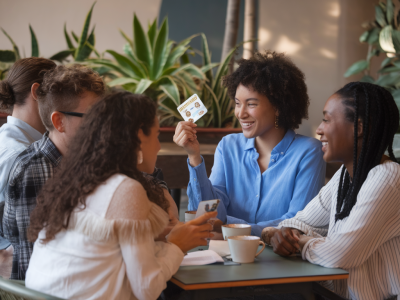
I have a small ritual that has quietly changed the way I move through cities and cafés: the five-minute café question. It’s a tiny conversational experiment — equal parts curiosity and constraint — that turns a brief, awkward exchange into something unexpectedly warm and human. Over time I’ve used it to open conversations with strangers while waiting in line, sitting at communal tables,...
Read more...
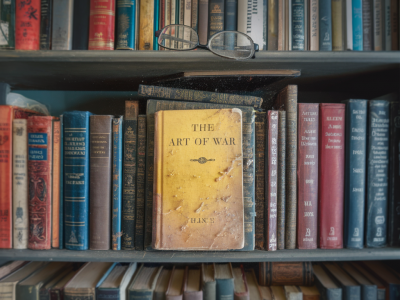
There’s a book on my shelf that I never open. Not because it’s rare or valuable, or even because it’s terrible—but because it feels like a small archaeological artifact of a person I used to be. When friends notice it they often ask, half-joking, “Do you still like that?” and I give the practiced shrug of someone who knows better than to explain. The book stays. It stubbornly refuses...
Read more...
I spent a month photographing empty chairs. It started as an experiment — a small, quiet challenge to myself to notice the everyday furniture that usually disappears into the background of life. I wanted to see what an ordinary object could reveal about presence and absence, about the things we assume are neutral but that in fact carry stories, habits and ghosts of conversations.Why...
Read more...
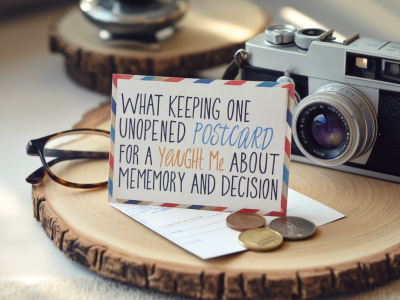
I found the postcard wedged behind a stack of mail on the windowsill, face down, its stamp still crisp and the handwriting faintly tilted as if whoever wrote it had been in a hurry and also smiling. I had known it was there — I remembered putting it on the sill a year ago when work felt hurried and the day felt full — but I hadn’t opened it. Not then. Not for a long time. Leaving it unread...
Read more...