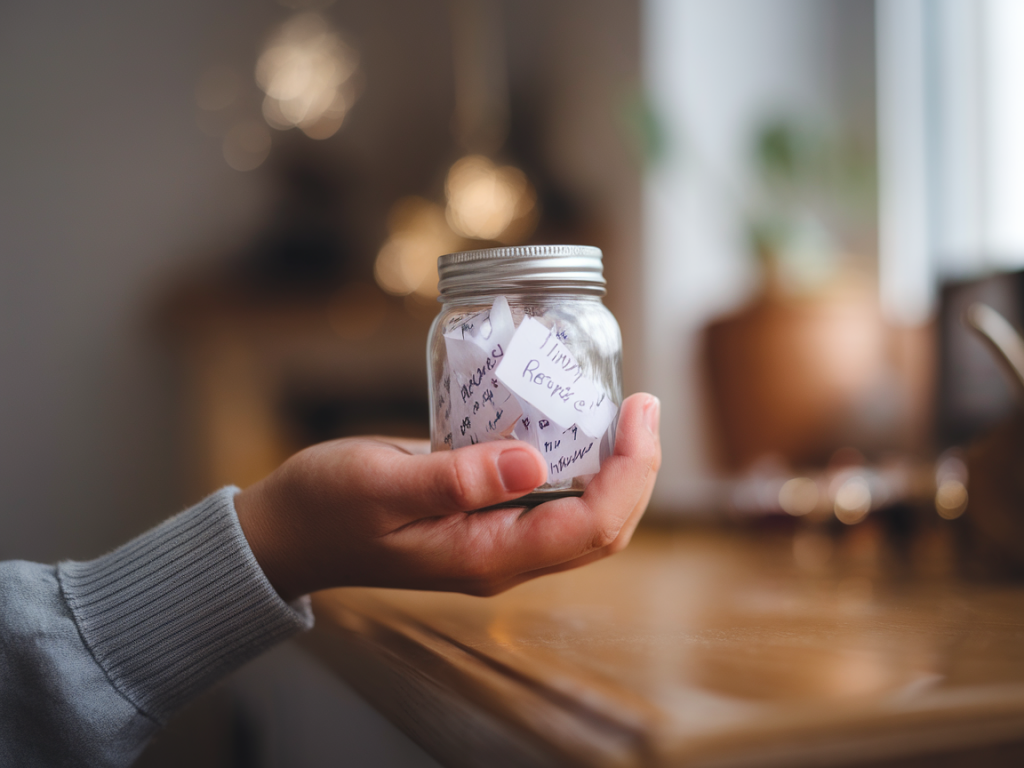
There’s a kind of ridiculous intimacy in keeping tiny regrets. They don’t announce themselves — they’re the half-smile when you realise you could have said something kinder, the quiet twinge when you opted for punctuality over a conversation, the small ache that follows leaving a book unread on your nightstand. For years I treated these little regrets as minor annoyances, the detritus of a lived life. Then I began to collect them, deliberately and gently, and discovered they had a strange usefulness: not as instruments of guilt, but as a practical guide to future choices.
Why tiny regrets matter
People often ask me: aren’t regrets supposed to be big and dramatic — missed careers, failed relationships, opportunities lost? That’s one kind of regret, and it has its place in our moral imaginations. But tiny regrets are the ones that recur. They’re the micro-decisions that shape our daily habits, our relationships and how we feel about ourselves in small moments. Over time, those micro-decisions add up.
What I found surprising is that tiny regrets are often more informative than grand ones. A huge regret might sit like a boulder: heavy and immovable, hard to parse into actionable change. Tiny regrets are more like pebbles: you can pick them up, examine their texture, and decide whether to keep them in a jar on your desk or to toss them back into the river. They reveal patterns — preferences we suppress, values we compromise, thresholds we repeatedly cross.
How I started to collect them
There was no epiphany, only curiosity. I began to write down small regrets the way some people jot grocery items: quickly, without judgment. The prompt was simple: "Today I wish I had…" I kept this in a notes app on my phone and also in the margins of notebooks. Over months, a modest archive grew.
- "I wish I had asked the artist about their process."
- "I wish I’d stayed for another cup of tea instead of leaving early."
- "I wish I hadn’t bought the cheaper headphones; now they feel frustrating."
- "I wish I’d said no to that meeting and gone for a walk."
One useful rule I gave myself: the regret had to be actionable in some small way. If it was a metaphysical 'I wish I’d chosen a different life' I left it to philosophers. The tiny regrets were specific, granular and often embarrassingly mundane.
What tiny regrets reveal
When I looked back through a few months’ worth, patterns emerged. Some recurring themes surprised me by how consistently they pointed to my unspoken preferences.
- Time versus novelty: I repeatedly regretted leaving conversations early. That showed I value presence more than I acknowledged.
- Quality versus cost: A series of regrets about purchases suggested that small savings were costing me frequent frustration.
- Curiosity versus politeness: I often regretted not asking follow-up questions. I realised politeness was sometimes a cover for reticence.
These patterns turned tiny regrets into diagnostic tools. They didn’t moralise; they mapped. They told me where my default behaviours were at odds with my declared values.
Turning regret into a decision heuristic
With a clearer map of patterns, I started translating regrets into a simple heuristic for future choices. It’s not a rigid rule, but a set of questions to ask when faced with a small decision:
- Will I remember this tomorrow? (If not, is it worth doing?)
- Is this choice aligned with how I want to feel in small, everyday moments?
- What would I advise a friend to do in the same situation?
- Is the immediate benefit worth the likelihood of a tiny regret later?
For example: before buying the cheaper headphones again, I ask myself whether the marginal financial saving is worth the repeated irritation I might experience. Before skipping a long conversation to preserve my schedule, I think about whether the regret of absence is the price I’m prepared to pay.
Practices for collecting and using tiny regrets
Here are practical methods I use and recommend for turning small regrets into useful information:
- Daily jot: Spend one minute at the end of the day listing any small things you wish had been different. Keep it brief and non-judgemental.
- Weekly scan: On Sundays, scan your list and highlight recurring themes.
- Regret tags: Use tags like "time", "money", "curiosity", "kindness" to group similar regrets.
- Micro-experiments: Pick one recurring regret and run a tiny experiment: if you often regret multitasking in conversations, try putting your phone away for one week and note the difference.
- Interface with routines: Put one habit change into your calendar — it’s easier to treat a tiny experiment like an appointment than a vague intention.
How this changes the way I frame decisions
Collecting tiny regrets reframed choice for me. Instead of seeing decisions as either trivial or life-defining, I began to see them as contributing to the atmosphere of my life. A habit of small kindly choices creates a different kind of daily weather than a pattern of convenience-first choices.
I don’t suggest we become paralyzed by the fear of small mistakes — that would be another kind of regret. Rather, this method invites curiosity. When a tiny regret recurs, ask: what value is being eroded here? Sometimes the answer is that a convenience encroached on something I care about; sometimes it’s that I was lazy or distracted. Either way, noticing creates the possibility of change.
When tiny regrets aren’t useful
There are limits. Tiny regrets can become obsessive if used as a moral cudgel. If you turn every evening into a laundry list of failings, you risk draining your energy rather than guiding it. So I pair the practice with compassion: one line, one observation, then let it go.
Another trap is mistaking occasional missteps for fixed flaws. Patterns matter, but single instances don’t necessarily indicate a trait. That’s why I watch for repetition before I act.
| Type of tiny regret | Possible insight | Small action |
|---|---|---|
| Leaving events early | Value of presence is underestimated | Commit to staying 10% longer next time |
| Buying cheaper items | Short-term saving harms quality of life | Set a threshold: if cost < 20% of desired quality, invest more |
| Not asking questions | Curiosity suppressed by politeness | Ask one real question per conversation |
Small changes, cumulative effect
I still write down tiny regrets. Sometimes I keep a physical jar and drop a tiny paper slip in — a ritual with the flourish of something old-fashioned. Other times I use the Notes app and let the list live in my pocket. The point isn’t neatness; it’s attention. Collecting these small frictions gives me a compass: not a map of grand destiny, but a tool to steer the quotidian course a little closer to how I want to feel and act.
When people ask whether this is indulgent navel-gazing, I tell them it’s the opposite: a humble practice of calibration. We don’t need to fix everything. We simply need to notice the small misalignments and decide, again and again, what matters enough to change.