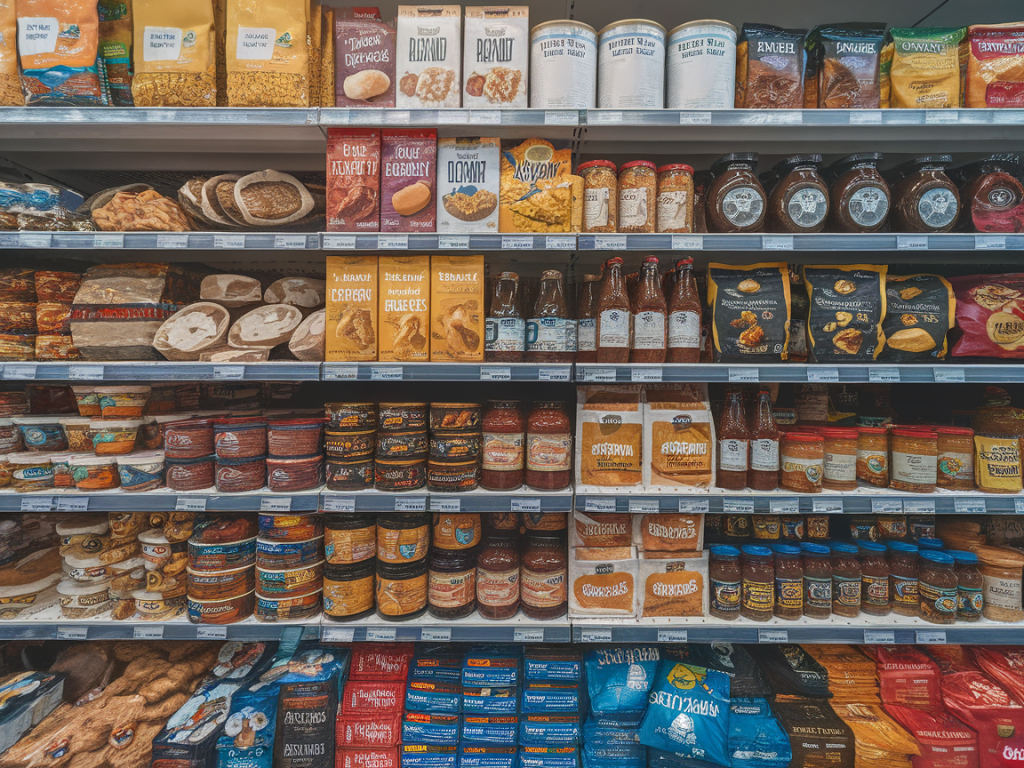
There is a small ritual I return to whenever I want to understand a place: I go to the supermarket. Not for the convenience of shopping, but because the items on the shelves — their packaging, the fonts, the claims and the price stickers — are a curious kind of public record. Reading supermarket labels has become a hobby of sorts, a way of learning the cultural history that finds its way into everyday life. It’s surprising how much a packet of biscuits or a tub of yogurt can tell you about trade, migration, national identity and changing social values.
Why labels matter
People often ask, “Aren’t labels just marketing?” Yes and no. Labels are marketing — they exist to persuade — but they are also signals. They tell us what a company thinks consumers care about, and by extension, what a society values or fears at a particular moment. Look closely and you’ll see patterns: the rise of “organic” and “free-range” in the 2000s, the influx of “gluten-free” in the 2010s, the recent proliferation of “plant-based” on everything from sausages to ice-cream. Each wave corresponds to larger shifts in public conversation about health, ethics and identity.
I remember standing in front of a refrigerated aisle in London, watching how dairy brands competed by layering claims: “Grass-fed,” “A2 milk,” “Low-fat,” “High-protein.” These were not neutral facts but invitations to join a particular story about what food should be. The shopper who chooses “grass-fed” is buying more than milk; they are buying an idea about animal welfare, terroir and even class.
Labels as condensed history
Think of labels as palimpsests. Underneath the glossy, modern design there are traces of older stories. A brand name that sounds quintessentially British might actually be owned by an international conglomerate; a “traditional recipe” can be a modern rebranding of an immigrant food. Consider, for example, how hummus was once exoticized in many European supermarkets and is now a mainstream staple with UK brands like Sabra (owned by PepsiCo) sitting alongside local artisanal flans. That shift marks a story of migration, palate change and the globalization of taste.
Then there are geopolitical histories. During shortages or conflict, labeling changes visibly: ration cards, “produce grown in X” stickers, or patriotic slogans. After the 2008 financial crisis, I noticed budget ranges like Tesco’s “Everyday Value” being renamed and redesigned to appear less austere. Such shifts in presentation reflect attempts to respond to or shape consumer sentiment.
Small design choices, big cultural clues
- Typography and language: A label that uses cursive script and pastoral imagery is selling nostalgia. Clean sans-serif fonts tend to sell modernity and health. Multilingual labels indicate an immigrant presence or a brand courting a cosmopolitan market.
- Imagery: Illustrations of farms and cartoons of cows suggest pastoral authenticity; minimalist photography suggests premium quality. If a brand uses photos of people, note who is pictured — age, race, gender — and what that says about intended consumers.
- Claims and certifications: “Fairtrade,” “Soil Association Organic,” “MSC Certified” — each certification reveals active political and ethical conversations. A rise in “fair trade” labels in the late 20th century narrated consumer interest in global justice; the more recent emergence of carbon labels maps onto climate awareness.
- Portion sizes and packaging: The move from large family-sized packets to single-serve options tracks changing household structures: more single-person households and different eating habits.
How to “read” a label like a mini cultural historian
If you’d like to try this at home, start with a question: What do I want to learn? If it’s migration patterns, browse aisles where international foods sit and note brand origins. If you’re curious about environmental discourse, study the certifications and the language around carbon and sustainability. Here are practical steps I use:
- Look beyond the front: the back panel often contains sourcing details and contact information. Country-of-origin labels and supplier lists are small but telling.
- Compare price tiers: what does the “premium” version claim that the “budget” version doesn’t? That contrast exposes social stratification in taste.
- Note dates of claim proliferation: when did “non-dairy” multiply across categories? When did “probiotic” become ubiquitous? These temporal markers correspond to larger health and cultural trends documented elsewhere.
- Pay attention to private labels: supermarket-owned brands are a fascinating study. Sainsbury’s, Waitrose or Lidl each curate identities — Waitrose’s packaging leans upmarket and moralistic, Lidl’s toward cost-effectiveness with design-savvy flourishes to compete on perceived quality.
Labels reveal backstories — supply chains, politics, migration
Consider tea. A label can reveal colonial and post-colonial legacies: “Kenyan black tea” may be a small sticker on an otherwise British-branded box. That tiny sticker compresses long histories of empire, plantation economies and post-independence trade relationships. Similarly, the provenance of seafood or chocolate can open conversations about labor practices and global inequities.
Supermarkets are also battlegrounds for political debates. When retailers decided to remove palm oil from own-brand biscuits, labels reflected activism and pressure from environmental groups. The re-emergence of palm oil in some products — masked by vague terms like “vegetable oil” — speaks to cost pressures and the limitations of consumer-driven ethical reform.
Brands as cultural narrators
Brands tell stories not just about products but about identity. Think of Marmite and its Britishness, or Philadelphia cream cheese with its Americana. Both are cultural shorthand. When an immigrant or smaller brand gains shelf space — a British supermarket stocking a Kurdish sausage or a Jamaican style jerk sauce — it signals a widening of national taste. Conversely, the disappearance of a once-common product can mark the fading of a community’s cultural presence.
| Label feature | What it often reveals |
|---|---|
| “Organic” certification | Shifts in health/environmental values; higher price points; regulatory frameworks |
| Multilingual packaging | Immigrant communities; export ambitions; diasporic markets |
| Private label rebranding | Retailer identity shaping; class signaling; market segmentation |
Practical curiosities I can’t resist
I have a shortlist of labels I check whenever I’m in a new place. In France I watch how “bio” is deployed differently than “organic” in the UK; in Spain the prominence of regional designations like “Denominación de Origen” speaks to local pride and protected foodways. In multicultural urban supermarkets, I look for hybrid packaging — English on one side, Arabic or Polish on the other — which maps the city’s linguistic geography.
One vivid memory: in a small British town I once found a jar of “piccalilli” with instructions that assumed it would be served with cold meats and a Sunday roast. That small cultural assumption — baked into the recipe copy — told me something about continuity, comfort and the ways British foodways have remained stubbornly anchored even as other shelves modernised.
Reading labels as an act of attention
To pay attention to labels is to treat the supermarket as a museum of the everyday. It’s a practice that cultivates curiosity: you learn to spot inconsistencies, to question what is marketed as “natural,” and to notice how market language shifts in response to politics, health fads and demographic change. It doesn’t make you immune to advertising, but it does turn consumption into a modest form of cultural inquiry.
If you’re sceptical, try it next time you’re passing an aisle. Pull a few items off the shelf, read the fine print, compare two brands, and let the labels tell you their stories. You’ll soon find that a humble packet of crisps or a bottle of olive oil can be a surprisingly eloquent storyteller — if you’re willing to listen.