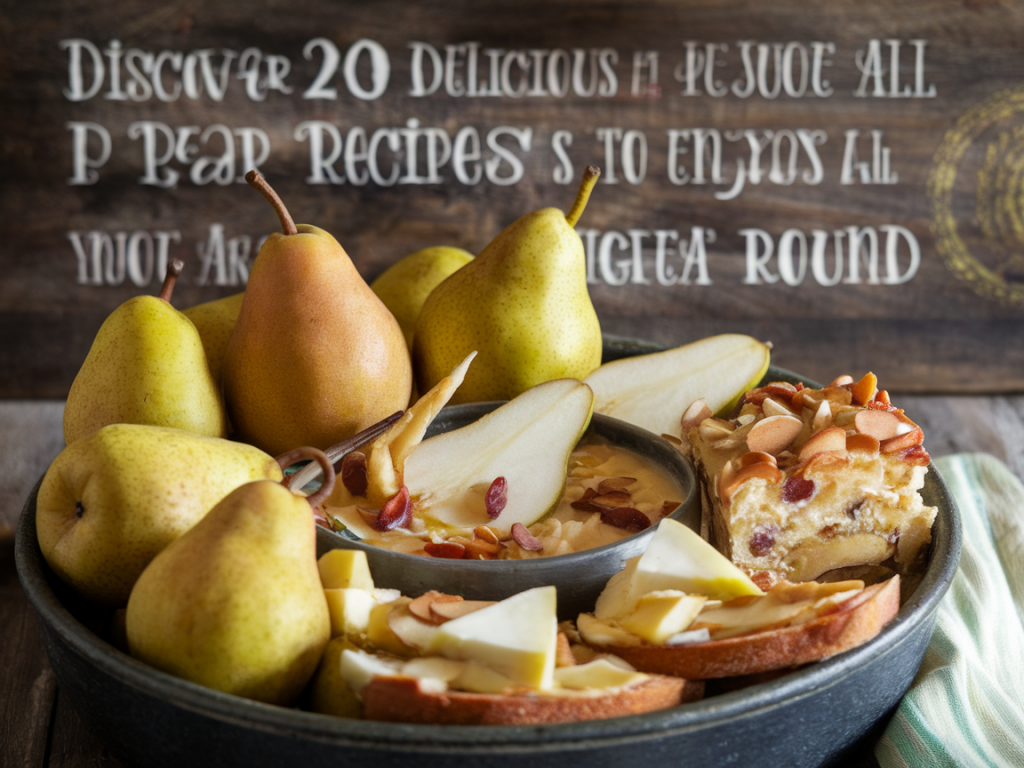
I have long believed that a single fruit can anchor a year of meals, small moments and gatherings. Pears do that for me: they’re gentle, versatile and forgiving, slipping from crisp snack to melting poached jewel with the same kind of humility I admire. In this piece I share idées gourmandes à base de poires — 20 recipes, approaches and riffs that let you enjoy pears all year round. I’ll also explain why pears work so well, give practical tips, a compact seasonal table, and point to research and resources if you want to dig deeper.
Why pears? A quick look at taste, nutrition and availability
Pears are often underrated beside flashier fruits, yet they have some convincing credentials. Nutritionally, a medium pear provides about 100 calories, 6 grams of fiber and a modest dose of vitamin C and potassium (USDA). According to FAO data, global pear production has been consistently high, reflecting both home-garden popularity and commercial supply lines that smooth seasonality for many markets.
- Texture variety: from crisp Bosc and Anjou to soft William/ Bartlett.
- Low-acidity sweetness: pairs well with cheeses, spices and wine.
- Cooking resilience: they poach, roast, grill and caramelize beautifully.
Sources I consult frequently when thinking about fruit seasons and storage: FAO statistics (fao.org), USDA FoodData Central (usda.gov), and culinary references like BBC Good Food.
20 idées gourmandes à base de poires — grouped for ease
I’m listing these ideas by meal or use. Each one is easy to adapt: swap spices, switch the sweetener, or use a different pear variety.
- Fresh snack or salad — Sliced pear with lemon, walnuts and blue cheese; pear and fennel salad with citrus vinaigrette.
- Breakfast — Poached pear overnight oats; pear compote to swirl into yogurt; pear+ginger smoothie.
- Baked goods — Pear upside-down cake; pear-almond tart; pear and cardamom muffins.
- Savory mains — Pork loin with pear–mustard sauce; roasted pears in a Gorgonzola tart; pear and caramelized onion galette.
- Appetizers & sides — Prosciutto-wrapped pear slices; pear chutney to serve with cheese boards; roasted pears with rosemary and goat cheese.
- Desserts & preserves — Pear poached in red wine; pear frangipane; pear jam or pear butter.
- Drinks — Pear shrub for cocktails, pear and thyme spritz, pear hot toddy.
- Freezer-friendly — Puree pears for sorbets or baby food; bake pear crisps and freeze portions.
My top 8 go-to recipes (short methods)
Here are the ones I return to most weeks. Each is an invitation to improvise.
- Poached Pears in Spiced Red Wine — Simmer peeled pears in red wine, sugar, cinnamon, star anise and orange peel until tender. Serve with mascarpone or vanilla ice cream.
- Pear & Blue Cheese Salad — Mixed leaves, thin pear slices, toasted walnuts, crumbled blue cheese and a sherry-vinaigrette.
- Pear-Almond Tart — Almond frangipane on shortcrust, halved pears arranged on top, bake until golden.
- Roasted Pears with Honey & Thyme — Halve pears, roast with a drizzle of honey and fresh thyme; serve with ricotta.
- Pear Compote for Breakfast — Dice pears, cook slowly with a splash of water, lemon juice and vanilla, then mash slightly.
- Pear & Pork Skillet — Seared pork chops, sliced pears added near the end with a splash of apple cider vinegar and butter to make a quick pan sauce.
- Pear Muffins with Cardamom Streusel — Fold diced pears into batter; top with brown sugar-cardamom crumble.
- Pear Shrub (for cocktails) — Combine pear, sugar and vinegar; let macerate, strain, and mix with sparkling water or gin.
Seasonality and storage — how to enjoy pears year-round
Pears have distinct harvest windows by variety: many are picked late summer through autumn, but controlled-atmosphere storage and imported fruit extend availability. Tips I use:
- Buy slightly firm pears (especially Bartlett/William) and ripen them at home at room temperature.
- To speed ripening, place a pear in a paper bag with a ripe banana (ethylene from banana speeds ripening).
- To slow ripening, refrigerate ripe pears for up to a week.
- Preserve surplus as compote, jam, or poached pears in syrup — these keep flavor for months in the fridge or freezer.
Table: Pear varieties, best uses and season
| Variety | Texture & Flavor | Best uses | Typical season |
|---|---|---|---|
| Bartlett / Williams | Juicy, sweet, soft when ripe | Poaching, compote, eating fresh | Late summer–autumn |
| Anjou | Firm, mild, versatile | Salads, baking, roasting | Autumn–winter |
| Bosc | Dense, honeyed, holds shape | Roasting, tarts, savory dishes | Autumn |
| Conference | Sweet, aromatic, crisp | Fresh eating, baking | Autumn |
Practical ratios and pantry pairings
Some simple ratios and pairings I use when improvising recipes:
- Pear compote: 1 kg pears : 100–150 g sugar : juice of 1 lemon (add vanilla or ginger to taste).
- Pear chutney: 1 kg pears : 300 g sugar : 200 ml vinegar : spices (mustard seeds, cinnamon, chilli).
- Perfect cheese board: pears + aged cheddar or Comté, blue cheese, walnuts and a drizzle of honey.
Numbers and trends (quick stats)
To give a sense of scale and interest:
- Global pear production: around 23 million tonnes annually (FAO recent data — varies year to year).
- Dietary fiber: a medium pear supplies roughly 6 grams of fiber — about 20% of an adult’s daily recommended intake (USDA).
- Pear storage: controlled-atmosphere storage can extend shelf life from weeks to several months, which is why pears can be on supermarket shelves outside harvest months (industry sources).
Where I look for inspiration and technique
My cooking notes often point me to practical sources: method clarity from BBC Good Food recipes, nutritional figures from USDA FoodData Central, and crop/market context from the FAO database. For preservation techniques and safe home-canning guidelines I refer to authoritative resources like the USDA’s Home Canning guides and reliable gastronomic references.
Selected external reads:
FAQ — quick answers to common pear questions
- How do I tell when a pear is ripe? Press gently near the stem: if it gives slightly, it’s ripe. Smell can also be a clue—ripe pears often emit a sweet aroma.
- Can I freeze pears? Yes: peel, core and slice; toss with lemon juice or sugar syrup and freeze on a tray before bagging to prevent clumping.
- Is poaching pears difficult? Not at all. Simmer pears in sweetened liquid (wine, tea, or simple syrup) until tender. Timing depends on ripeness and size: usually 15–30 minutes.