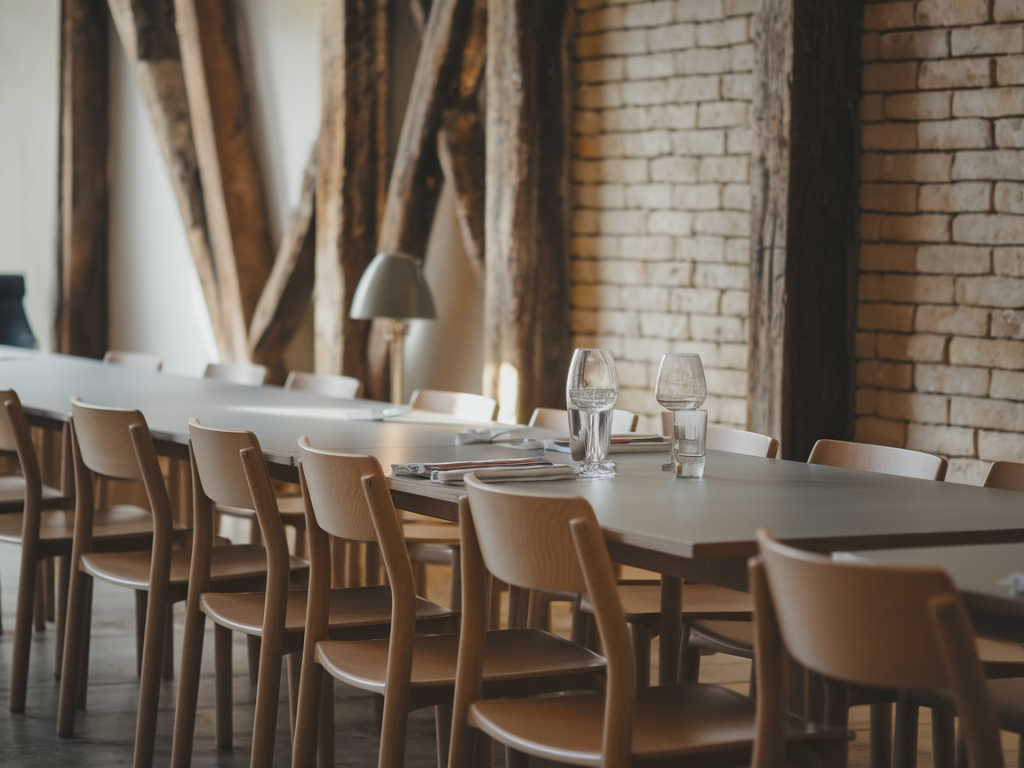
There is a small ritual I have come to practice at gatherings: I leave one chair intentionally empty. Not always, and not as a rule, but often enough that friends notice. Sometimes it’s a conspicuous vacant place at the head of the table; sometimes it’s a spare seat at the far corner. The empty chair is neither an oversight nor a sign of scarcity. It’s a deliberate gesture that lets a quiet conversation happen between generosity and boundary.
How the habit began
I first started leaving an empty chair because of a practical scenario: hosting a dinner where I knew a neighbor might show up late if they finished work. I wanted to communicate welcome without texting three times. The empty seat became a small, visible promise—there is room for you, and you can arrive on your terms.
Over time the gesture morphed. The chair stopped being merely practical and became symbolic. It softened the feeling of a closed circle and created an illusion of elasticity in an otherwise planned event. People began to comment—was it for someone who had to leave early? For someone imaginary? For the spirit of hospitality? Their speculation revealed something I had been sensing: a single empty chair performs social work. It says both “you are welcome” and “not everything is binding.”
What the empty chair teaches about generosity
Generosity is often imagined as a maximalist virtue—the open door, the extra helping, the willing sacrifice. But generosity is also a negotiator of presence. Leaving one chair empty teaches a gentler, less dramatic form of generosity: the readiness to make room.
- Anticipatory welcome: The empty seat signals that you expect more than what you have planned, which is in itself a gift. It tells latecomers, the shy, or the undecided that they will be met with an already-warmed place.
- Graceful flexibility: There’s a comfort in not fixing everything in place. When a plan is flexible, people feel less judged for arriving late or changing their minds. Generosity here is structural, not merely performative.
- Invitation to strangers: I’ve watched strangers use that seat as permission to join a conversation. An empty chair can dismantle the invisible barrier around a clique.
Generosity as room-making is subtle. It requires foresight and restraint—choosing to leave something unused so someone else might use it. It suggests trust that the world will fill its own gaps.
What it teaches about boundaries
Curiously, the empty chair also helps define limits. Hospitality and generosity are not boundless; they exist in tension with self-care, logistics, and safety. The chair can become a tool for delineating how much openness feels sustainable.
- Clear capacity: By leaving exactly one chair empty instead of several, you offer space without suggesting indiscriminate overflow. It’s a calibrated welcome.
- Controlled unpredictability: The presence of a single unpredictable guest is manageable; a flood of the unexpected is not. The empty chair allows for one variable without compromising the host’s plan.
- Consent as visible: Hospitality that expects an RSVP is different from hospitality that says “drop by anytime.” An empty chair holds that middle ground: open, but not unlimited.
Boundaries become visible when we make room for them in everyday gestures. The empty chair is a small architecture of consent. It communicates that welcome has a shape—you are invited, but within a frame that protects the evening’s integrity.
Practical variations and when I don’t leave it
Not every gathering merits an empty chair. There are times when clarity is kinder than openness. For example:
- At a formal dinner with a fixed number of guests and dietary restrictions, adding a surprise seat is impractical.
- When the dinner is meant to be intimate—an intentional reunion of a specific group—an open seat would betray the purpose.
- If safety or privacy is a concern, welcome must be carefully filtered; an empty chair would be misleading.
But when the aim is to keep a doorway ajar—when someone might bring a friend, when a neighbor could appear, or when the mood is casual—the single empty chair is my shorthand for “if you need to belong, there’s a way in.”
Small social experiments: what I’ve observed
I have noticed a few repeat patterns when that chair is left in place:
| Late arrivals | Tend to breathe easier, join without elaborate apologies, and settle quicker into the group. |
| Shy guests | Use the seat as permission to be there; they often become pivotal quiet listeners who later share unexpectedly sharp observations. |
| Hosts’ mindset | Feel less constricted by timing and logistics; the evening can pivot with less friction. |
These outcomes are not universal, of course. Sometimes the empty seat remains an empty seat and becomes an awkward hush. Other times it fills and everything feels oddly right as if the table were waiting for that person’s particular laugh.
Why this small practice matters beyond dinner
On a larger scale, leaving an empty chair is a metaphor for the kind of world I want to inhabit: one that balances openness with parameters, generosity with protection. It’s a low-cost, low-risk experiment in how we organise social life.
In public life we often swing between over-inclusion and gatekeeping. The empty chair suggests a middle route—practices that welcome without erasing the need for structure. It is an ethic of provisional welcome: provide a place, but let it be discerning.
Inviting reflection
If you find this an appealing gesture, you might try it and watch what happens. Leave a single chair empty at your next gathering—not as a performance, but as a test of the evening’s elasticity. Notice who uses it, who notices it, and how it reshapes the rhythms of arrival and departure. Pay attention to whether leaving space makes you more tolerable of surprises or whether it makes you feel overexposed. Both answers are instructive.
Finally, understand that the empty chair is less about a literal seat and more about a stance: an intention to make room, while protecting the conditions that make welcome possible. It’s a small practice that teaches the larger, often contradictory lessons of being generous and keeping boundaries—lessons worth practicing at any table.