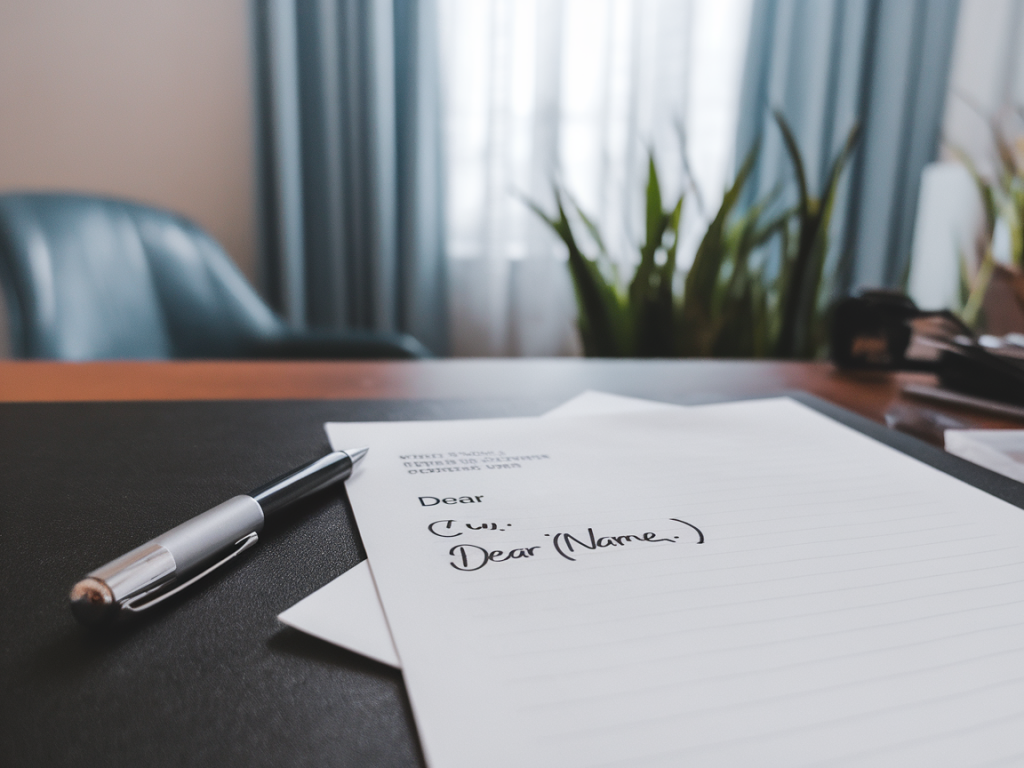
I keep a small stack of half-written letters in a drawer — not because I’m a sentimental hoarder, but because the very act of leaving a sentence unfinished feels, to me, like a deliberate pause in how I hold someone in memory. Some of these letters were started in anger, others in gratitude; some were meant to apologize, others to explain. None of them were sent. Over time I’ve noticed that keeping these fragments changes the way I forgive people, and the way I remember them. It’s as if the unfinished letter becomes a soft place between forgetting and resolution.
What a half-written letter actually is
A half-written letter is not merely an unsent message. It’s a physical or digital object that embodies an intention — to explain, to accuse, to confess, to reconnect — that remains suspended. It’s often messy: crossed-out lines, fragments of anecdotes, questions that trail off. Sometimes there’s an address on an envelope; sometimes it’s a draft in a Notes app that I haven’t opened for years. The incompleteness matters. It resists closure, and in doing so it resists a single, conclusive story about the person I’m writing to.
That resistance matters because memory rarely offers tidy narratives. We remember people as a collage: the small kindnesses mixed with humiliations, the evenings of laughter alongside the arguments. A finished letter tends to impose order — a final version that says, “This is how it was, this is what I forgive or condemn.” An unfinished letter keeps the collage as collage, allowing me to hold contradictions side by side.
Halting the rush to judgment
One of the first things I learned from my half-written letters is that forgiveness rarely arrives in a single dramatic moment. It’s a slow, ambivalent thing. When I leave a sentence unfinished — “I forgive you because…” or “I will never forgive you for…” — I give myself permission not to rush toward a tidy closure. Without an authoritative finished version of events, I avoid cementing my anger into permanent identity. In practice, that means I can return to a person’s memory without first having to re-litigate a single catastrophic verdict.
This is subtly different from refusing to forgive. Unfinished letters are not avoidance; they are the opposite of performing moral certainty. They are an active, reflective waiting. Sometimes, months later, I pick one up and add a line. Sometimes I destroy it. Often, I do nothing, and that doing nothing is a form of forgiveness in itself: an acceptance that pain and affection can coexist.
The letter as a mirror for self-forgiveness
Keeping drafts has also made me kinder to myself. Many of my half-written letters began as angered attempts to name another’s wrongs, but they almost always curve back toward my own part in the story. Writing forces me to notice what I wanted at the time, what I misunderstood, where my expectations were unfair or unspoken. The trailing sentence — “I should have…” or “I didn’t tell you that I…” — often remains unfinished because completing it would mean fully acknowledging my own culpability. But the fragment is enough to remind me that I, too, contain contradictions.
There’s iron in that admission. When I read those drafts years later, the self I was then looks incomplete, like a sentence waiting to be revised. That humility dissolves some of the bitterness I might otherwise take out on the other person. If I can forgive myself — even hesitantly — I find it easier to inhabit a softer position toward others.
Memory becomes less monolithic
We tend to remember people either as heroes or villains, but a half-written letter resists that simplification. Because the draft is messy, I have to keep remembering the many small, contradictory details that led me to write it in the first place. A paragraph might begin with a precise memory — a summer afternoon in a rainy cafe — and then stop cold. When I revisit it, I’m forced to recontextualize the moment rather than let a single narrative stand in for the whole relationship.
This matters for long-term memory. Neuroscience tells us that each time we recall a memory we slightly reshape it. Leaving letters unfinished creates purposeful recall moments: I pick up a draft and, in parsing the sentence, I reconnect with nuance rather than a single dominant emotion. The result is a more textured recollection that allows for openness to change.
How the practice changes social behavior
Keeping draft letters doesn’t just alter my inner life; it nudges how I behave in relationships. For example:
Sometimes that restraint is practical. An email flung in anger to a colleague can damage a career. But more often the restraint is ethical: a recognition that the person I’m tempted to condemn is also the person with whom I share history, obligations, or affection. The unsent letter creates a middle space where accountability and tenderness can coexist.
When a letter must be finished — and what that looks like
There are moments when completing a letter feels necessary: to apologize properly, to set a boundary, to reclaim dignity. When I do finish and send one, the process is careful. I read the draft aloud, I pare back language that seeks to wound more than clarify, and I often include an invitation to continue the conversation. Finished letters are different now — they are less about pronouncing judgment and more about opening a door.
Sometimes finishing means burning the paper or deleting the file. That finality is a kind of ritual: I choose how the memory of that sting is archived, whether by transforming it into a lesson, by releasing it, or by folding it into the complex person the other was.
Practical ways to try this yourself
If you’re curious to experiment, here are gentle steps I use:
Keeping half-written letters has changed me into someone more willing to live in the gray. It hasn’t made me more forgiving in a dramatic, saintly way. Instead, it’s given me the patience to hold people — and myself — as complicated, unfinished sentences. That, in the end, feels like a very human kind of mercy.